CSAF Security Advisories: Format, Parsing, and Automation Basics
CSAF replaces human-readable PDFs with machine-readable JSON that tracks affected products and fixes with precise structural detail.
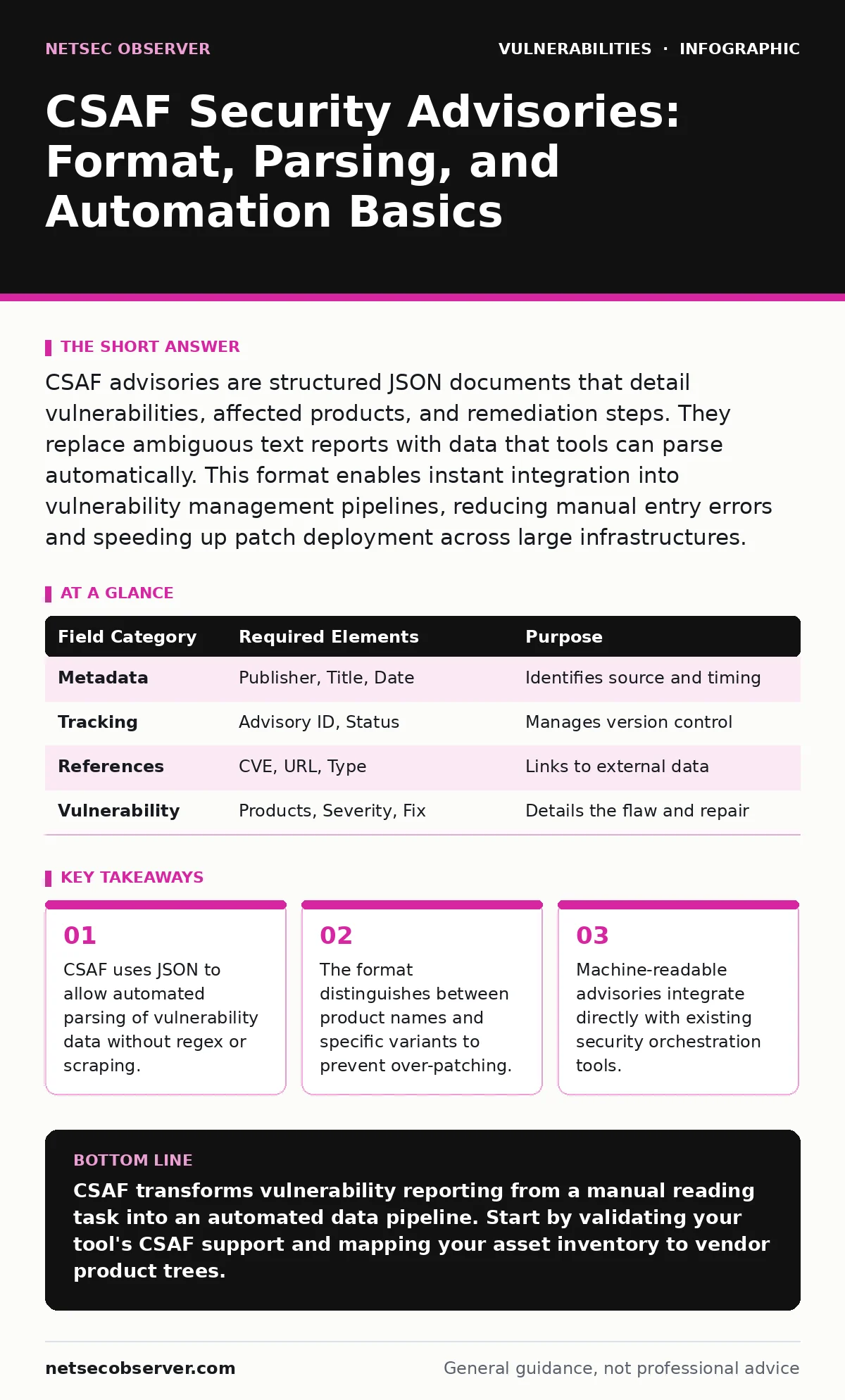
CSAF advisories are structured JSON documents that detail vulnerabilities, affected products, and remediation steps. They replace ambiguous text reports with data that tools can parse automatically. This format enables instant integration into vulnerability management pipelines, reducing manual entry errors and speeding up patch deployment across large infrastructures.
What is a CSAF security advisory?
A CSAF security advisory is a machine-readable document that follows the Common Security Advisory Framework standard to report vulnerabilities. Unlike traditional PDFs or HTML pages, this format uses JSON or XML structures that software can process instantly. The framework separates the human-readable summary from the structured data, allowing automated tools to ingest vulnerability details without complex parsing logic. This separation ensures that your systems receive accurate data while humans read a clear narrative.
How does CSAF differ from CVE data feeds?
CSAF provides a complete narrative of a vulnerability, whereas CVE identifiers only provide a unique reference number. A CVE tells you a flaw exists, but CSAF explains which products are affected and how to fix them. The advisory includes links to CVEs, but it also contains version ranges, affected configurations, and specific remediation instructions. This difference matters because CVE lists often lack context about whether a specific product variant is actually vulnerable, leading to false positives in your scans.
Why do organizations switch to CSAF formats?
Organizations adopt CSAF to eliminate manual data entry and reduce the risk of human error. Reading a PDF and typing details into a ticketing system is slow and prone to mistakes. CSAF files can be pushed directly into your vulnerability management platform, where they update asset records automatically. This automation accelerates the time between a disclosure and your remediation efforts. It also ensures that your team has consistent, structured data rather than fragmented notes from email threads.
What data fields are mandatory in CSAF?
A valid CSAF document must include metadata, a tracking section, a references list, and a vulnerability details section. The metadata section identifies the publisher and the document version. The tracking section provides the ID and status of the advisory. The references section links to external resources like CVEs or technical reports. The vulnerability section lists the affected products, the impact, and the fix. Missing any of these sections renders the document invalid for most automated parsers.
| Field Category | Required Elements | Purpose |
|---|---|---|
| Metadata | Publisher, Title, Date | Identifies source and timing |
| Tracking | Advisory ID, Status | Manages version control |
| References | CVE, URL, Type | Links to external data |
| Vulnerability | Products, Severity, Fix | Details the flaw and repair |
How does CSAF handle product identification?
CSAF uses a hierarchical product tree to define exactly which items are affected. This structure distinguishes between a base product and its specific variants or configurations. For example, a web server might have a base entry, with sub-entries for Linux and Windows versions. This precision prevents tools from flagging unaffected variants. It mirrors the complexity of real-world deployments where a single vulnerability might only affect specific builds or configurations, similar to how you must check for hard-coded credentials in specific service modules rather than assuming the entire application is compromised.
Can I automate CSAF ingestion safely?
Yes, but you must validate the source and structure before trusting the data. Automated ingestion works best when you verify the digital signature of the CSAF file. This ensures the advisory comes from a trusted publisher and has not been tampered with. You should also map the CSAF product identifiers to your own asset inventory. If your internal naming conventions differ from the vendor's, you need a translation layer. Without this mapping, your tools may miss affected assets or flag clean ones, creating noise in your alerts.
What are the limitations of CSAF coverage?
Not all vendors publish CSAF advisories, and those who do may lag behind public disclosures. The format is a standard, not a mandate, so adoption varies by industry and company size. Some organizations still rely on unstructured blog posts or email alerts. This gap means your automation pipeline must handle multiple input types. You cannot assume every vulnerability will arrive in CSAF format. You must supplement automated feeds with manual monitoring for critical vendors who have not yet adopted the standard.
How does CSAF support remediation workflows?
CSAF includes specific fields for remediation guidance, such as patch versions and workarounds. These fields allow your orchestration tools to trigger automatic update jobs or generate tickets for manual fixes. The structured nature of the advice means you can route tasks based on severity or product type. For instance, high-severity fixes for critical infrastructure can trigger immediate alerts, while low-severity items can be scheduled for maintenance windows. This targeted approach reduces alert fatigue and ensures that dependency updates are applied efficiently without disrupting business operations.
Is CSAF compatible with existing security tools?
Most modern vulnerability management and SIEM platforms support CSAF ingestion out of the box. The standard design of CSAF aligns with common data models used in security information management. You can map CSAF fields to your tool's schema with minimal configuration. This compatibility allows you to centralize vulnerability data from multiple sources into a single dashboard. It simplifies reporting and compliance audits by providing a consistent format for all advisories, regardless of the original vendor.
Key takeaways
- CSAF uses JSON to allow automated parsing of vulnerability data without regex or scraping.
- The format distinguishes between product names and specific variants to prevent over-patching.
- Machine-readable advisories integrate directly with existing security orchestration tools.
CSAF transforms vulnerability reporting from a manual reading task into an automated data pipeline. Start by validating your tool's CSAF support and mapping your asset inventory to vendor product trees.
Frequently asked questions
Do I need special software to read CSAF files?
No, you can view CSAF files with any JSON viewer, but automation requires a parser that understands the schema.
How do I handle CSAF files from untrusted sources?
Always verify the digital signature and compare the data against known-good sources before processing.
Can CSAF track zero-day vulnerabilities?
Yes, once a vendor acknowledges a zero-day and issues an advisory, it can be formatted as CSAF.
Is CSAF free to use?
Yes, the CSAF standard is open and free for any organization to adopt for their advisories.
How this guide was produced: written by the NetSec Observer editorial team with AI assistance, checked against the public references listed below, and reviewed when the facts change. See our editorial policy or report an error.