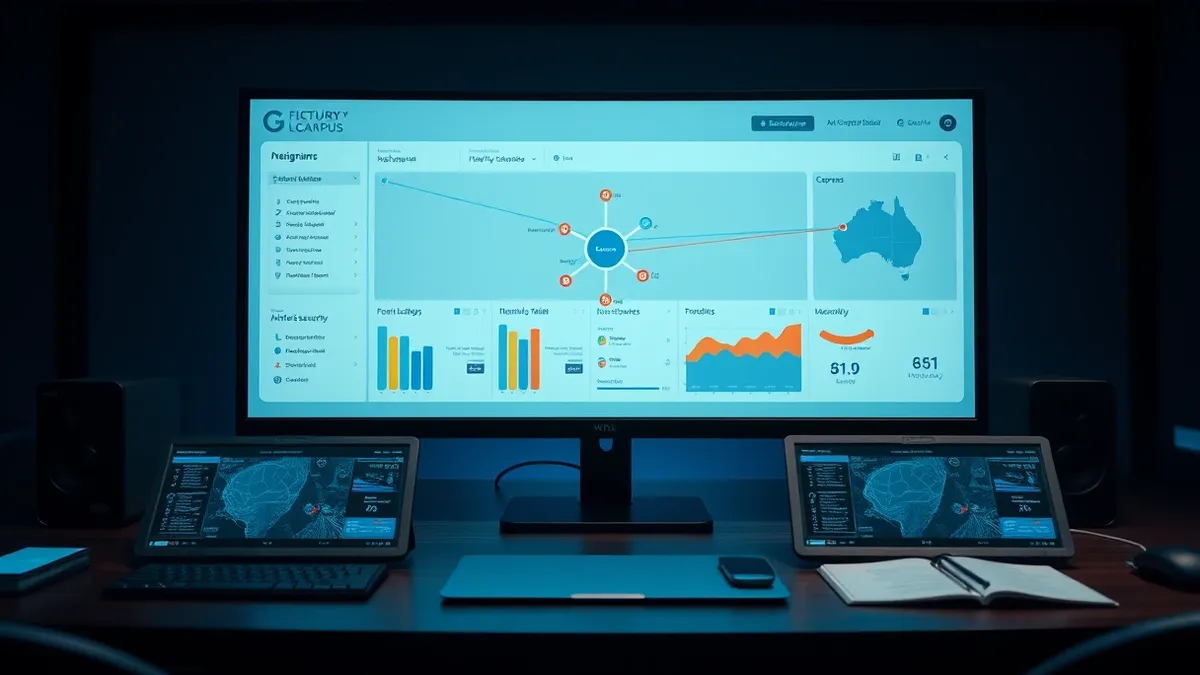
Rapid7 Command Platform Multi-Tenancy Model for University Security Operations
Centralized visibility across distributed campuses helps university security teams coordinate incident response and manage compliance without removing local autonomy.
Key points
- Federated university structures require security architectures that balance local campus autonomy with central governance and oversight.
- Multi-tenancy in the Rapid7 Command Platform allows central teams to monitor system-wide risks while keeping campus-specific data separated.
- Shared visibility enables faster identification of attack patterns spreading across different campuses and reduces manual inventory efforts.
Higher education security teams face increasing pressure from frequent attacks across complex, distributed environments. According to Rapid7, campus-by-campus security models often hinder intelligence sharing and coordinated response efforts. This fragmentation makes it difficult for institutions to understand where risks sit within the wider organization. The challenge is compounded by overlapping compliance requirements such as FERPA, GLBA, HIPAA, and CMMC, which complicate data impact assessments and reporting obligations.
Root cause
The primary issue stems from the federated nature of most university systems. Individual campuses typically manage their own leadership, budgets, users, and technology environments independently. While a central office provides governance, security programs often operate as separate collections rather than a unified capability. This structural separation creates visibility gaps that prevent central teams from identifying whether a security issue appearing at one location is spreading to others.
Attack path
When a new attack pattern is detected at a single campus, it risks remaining a local discovery without shared visibility. Central security teams need to determine if similar activity is occurring elsewhere in the system. Without cross-campus visibility, investigators may struggle to distinguish whether suspicious activity originated at a specific campus or simply became visible there first. Independent investigations at each location slow down response times and increase the chance of missing broader compromise indicators.
Affected versions
The architectural challenge applies to multi-campus university systems operating with decentralized security programs. This includes environments where campuses, research facilities, health services, and administrative teams maintain different technology needs and levels of independence. The issue is not tied to specific software versions but rather to the organizational structure and lack of centralized security visibility across the institution’s distributed infrastructure.
Mitigation
- Implement multi-tenancy features in security platforms to maintain central visibility while preserving data separation for individual campuses.
- Establish shared workflows that allow central teams to distribute response guidance across the institution without exposing local data.
- Use continuous external scanning to identify internet-facing assets like student portals and research servers that may exist outside standard IT inventories.
- Adopt a security architecture that scales with the university system, allowing new environments to be added without redesigning oversight mechanisms.
Signals worth monitoring
Teams should look for discrepancies between local alerts and system-wide asset inventories. Watch for repeated indicators of compromise appearing across different campus networks simultaneously. Monitor for unauthorized access attempts to internet-facing services that were not registered in central asset lists. Check whether vulnerability remediation statuses are consistent across all campuses or if some locations remain exposed. Verify that compliance reporting data matches the actual scope of affected systems identified by central monitoring tools.
Background: Indicators of attack
Indicators of attack are behavioral patterns that signal an active adversary. Unlike static indicators of compromise, they focus on actions like lateral movement or data staging. Monitoring these behaviors allows security teams to detect and stop intrusions in progress, rather than reacting after damage is done.
Read the full guide: Indicators of Attack: Definition, Detection, and Practical Usage
What to do and how to stay safe: Rapid7
- Review current security architecture to ensure central teams have visibility into all campus environments without compromising local data privacy.
- Establish standardized workflows for sharing threat intelligence and response guidance across all distributed security teams.
- Conduct regular scans of external attack surfaces to identify unregistered assets such as research servers and faculty websites.
- Validate that compliance reporting processes can accurately determine data impact and reporting obligations across all campus locations.
Step-by-step guide: Phishing Email Examples: How to Spot the Hidden Traps
General security guidance from the NetSec Observer newsroom. It is not confirmed advice from the organisations named in this story.
Frequently asked questions
How does multi-tenancy help university security teams?
It allows central teams to maintain visibility across the university system while keeping campus-level data and access separated.
What compliance challenges do universities face?
Overlapping requirements across FERPA, GLBA, HIPAA, and CMMC make it difficult to establish data impact and reporting obligations.
How can teams identify missing assets?
Continuous scanning of the public internet helps identify externally exposed services and assets that internal inventories may have missed.